
Our History with the Instincts
Jul 20, 2026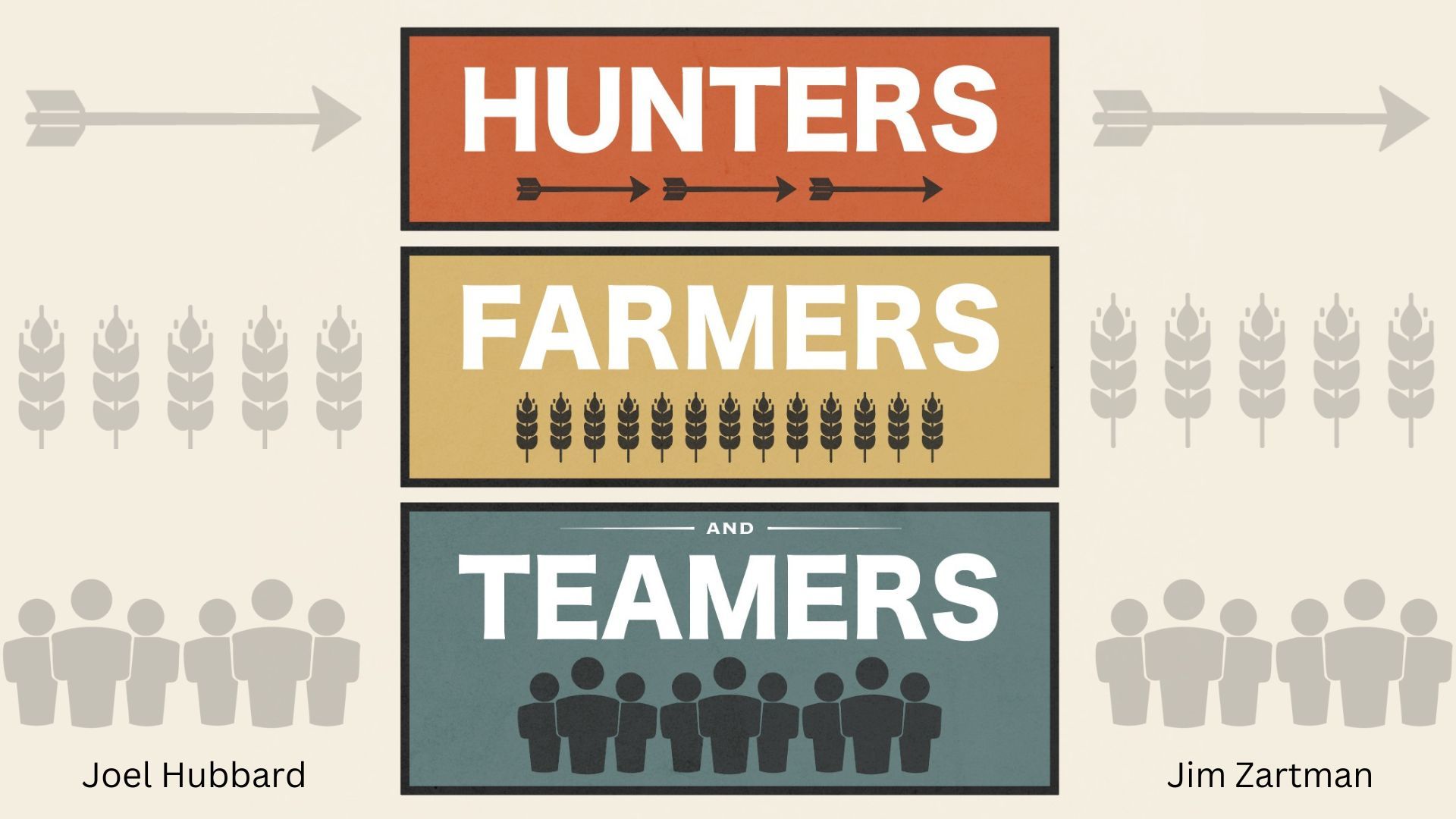
Because we talk about our history with the Instincts on a recent podcast, I wanted to write about that here. I want to take you through the journey of how we continue to learn. If you haven’t taken the stacks test, check it out: https://www.instinctstack.com
Before we get into the story, I’ll get this out of the way. Because we want people to take the deep dive into instincts we are offering our full instincts course at 70% off. Get the course HERE. We also knock down the Instinct business book so order HERE.
Part One: How it Began
Back in 2021, we had Beatrice Chestnut on the podcast talking about Enneagram subtypes. This is work many have done—essentially combining the Enneagram type with the dominant instinct and calling that a subtype. As a refresher, many teachers refer to the instincts as self-preservation, sexual, and social, but we call them hunters, farmers, and teamers since we work a lot with the corporate space and the terminology works better.
As the Enneagram world continued to explore and better understand the instincts, it served a couple primary functions. One of them was that it explained diversity within a given type better than previous theories, such as wings or tritype, which had attempted to account for the wide variety within the types.
When we had Beatrice on the podcast, we were fascinated by the work she had done in this area, and we’re also fans of her book 27 Pathways. We wanted to learn more. So, like we often do, we threw ourselves into the research by creating our first instincts assessment and doing a panel season on the 27 subtypes.
Instead of coming away feeling like we had a greater understanding of the subtypes, we came away convinced that there was so much more to learn. We realized we were just beginning to scratch the surface of what we could learn from this tool—and that it had been radically underutilized within the Enneagram community.
As the Enneagram world continued to explore and refine instincts, one of the most important contributions became clear: instincts helped explain diversity within a given type better than many previous theories (like wings or tritype) that were often used to account for how varied people can look inside the same type.
That instinct lens gave us a stronger explanation for the wide range of expression inside each type—and it set the stage for everything we started noticing next.
Part Two: What We Started Noticing
After our initial subtypes podcast, we started having more and more conversations about what we were noticing. One of the most fascinating results of that season was that whenever we had a particular subtype represented, there was often a relatively common thread: many people in that subtype group shared a similar secondary instinct and a similar repressed instinct.
And yet, in every group there was often an oddball out—someone whose answers throughout the conversation were slightly different than the others. Close enough to belong, but different enough to catch our attention. Over time, we noticed a pattern: when we got to the end of the episode and asked for their secondary instinct (and clarified their full stack), that person often had a different stacking than the rest of the group.
People have often used the term countertype to describe when someone’s dominant instinct pushes against some of the natural tendencies of their type. For example, as a social Eight, the social instinct can dial down some of the visible intensity and increase some of the natural warmth of the Eight.
Through this work, we also realized there was often a related dynamic: a kind of counterstack effect. People with certain stacks can have a harder time identifying their true Enneagram type because the details of their stacking make them not visibly appear like others they share a type with. Their motivation and strategy may match, but their expression doesn’t always fit the most common “look” of the type. And we started seeing that the literature on certain stacks—and certain expressions of each type—is still radically underrepresented.
All of this made us increasingly curious. Our regular conversations started to almost always include something we were learning about instincts, both with corporate clients and individual clients. We began gathering more and more data, and in future podcast seasons, guests would often include information about their instincts to help nuance the conversation—whether the topic was relationships, the Driven to Drawn series, the three centers, stances, or something else entirely.
The last five years has been a continual research project into these varieties.
One of the things I love about the Enneagram is that it can be very simple and you can still get a lot from it. Just understanding the three centers of intelligence can help someone take a significant step toward better self-understanding and healthier relationships. But when you understand the instincts along with the centers, you really have something deeper—something that can profoundly impact transformation and how you relate to yourself and others.
I also love the nuance that emerges when you account for the full instinctual stack: once you consider Enneagram type plus full stacking, there are 54 clear variations within the Enneagram, because each type has six stack expressions. That level of nuance gets complex quickly—but humans are complex.
This has also changed the way we write type descriptions. We try to focus on what is consistent across the six variations: the core motivation of the type (which remains consistent) and the strategy of the type (also consistent). And then we make room for what can vary dramatically: the expression of the type, which shifts significantly based on instinctual stack and other factors like cultural upbringing.
This is why we say no one fits in a box. Patterns are real, and they help you understand your starting point—but the goal is not containment. That’s why our logo is a compass. Your type isn’t your landing place; it’s your launch pad. It’s the “you are here” spot on the map that helps you learn to navigate the terrain.
Part Three: Hunters, Farmers, and Teamers
Through all of this research — with clients, through podcasts, through our assessments — we realized a couple of important things.
The first was language.
The traditional instinct language of self-preservation, sexual, and social worked well on the consumer side of our business. But when we stepped into corporate environments, it became problematic. The word “sexual,” in particular, created unnecessary friction and confusion. It required explanation before application.
After working with many organizations, we landed on language that translated far more effectively:
-
Self-Preservation → Farmer
-
Sexual → Hunter
-
Social → Teamer
These terms preserved the psychological meaning of the instincts while making them usable in professional environments. They made the framework accessible without diluting it.
The second realization was about simplicity.
We became increasingly convinced that simple tools are needed. The most powerful frameworks are often those that break reality down to its most fundamental movements. When something can be explained simply, people can actually use it. And when they use it, nuance follows.
That conviction led us to write Hunters, Farmers, and Teamers. We knew even as we wrote it that we were still only scratching the surface of what this tool could become. The book wasn’t a conclusion. It was a starting point.
As we applied the instincts more broadly, I began to see something else: this framework has both greater simplicity and greater depth than many of the tools widely used in the corporate world — Myers-Briggs, DISC, Insights, Predictive Index, Hogan, and the many others that continue to be developed and marketed.
Those tools have their place. But most of them measure behavioral tendencies or cognitive preferences. The instincts operate at a more foundational level. They describe what a person is wired to prioritize.
Farmer- Stability and sustainability.
Hunter- Forward movement and risk.
Teamer- Cohesion and belonging.
I started seeing the instincts as a kind of primal blueprint — the pattern that has carried humanity from the first fire to the tallest skyscraper. These are not modern constructs layered onto human behavior. They are ancient movements that have shaped survival, progress, and cooperation from the beginning.
Understanding them helps people do more than survive in their work. It helps them thrive in the work they are most naturally wired to do.
That’s why we chose to write a business-focused book on the instincts. We believed — and still believe — that this framework can stand on its own as an incredibly helpful tool, especially for teams.
It gives leaders a shared language to understand why someone pushes for change (Hunter), protects systems and resources (Farmer), or prioritizes alignment and morale (Teamer). It clarifies tension without personalizing it.
At the same time, the instincts can also serve as a gateway. For those who want to go deeper, they become the starting point for combining:
-
Full instinctual stack
-
Enneagram type
-
And the lived experience that shapes expression
It’s there — at that intersection — that we begin to understand the way a person is wired with more precision than many other Enneagram theories have offered. In our experience, the full stack does more to explain the nuance within a type than wings, tritype, or many other popular overlays.
Since creating this work, we’ve been invited into both corporate and consumer spaces in new ways. The framework travels well. It holds up. It resonates.
We don’t see ourselves as experts in the sense of having “arrived.” We resist that language because there is always an edge of learning—every new conversation, every new client, every new stack combination reveals something we hadn’t fully seen before. Since creating that work, we’ve been invited into many areas of both the corporate and consumer worlds to teach on the instincts, and every time we do, the people we’re working with add contributions that deepen or clarify the framework. That continued curiosity, exploration, and learning has kept taking us deeper.
Part Four: The Deep Dive Into the Stack
Part Four is about how we’re taking a deep dive into the stack.
As we’ve continued to learn, we’ve begun focusing on where to take this work next. We knew we needed to do some standalone work on the instincts to clarify how the stack works together and to nuance some of the details around that.
Learning how the stack functions — and how each instinct shows up differently depending not just on a person’s type, but where it falls in their stack — has taught us some important lessons. It has helped people not just understand themselves, but also understand, in an organizational context, the right kind of hire or the right kind of blend for a job. Teams have used it to assign tasks and make sure they place projects with the right people.
Here’s a basic rundown of how the stack functions:
Dominant Instinct
Natural gift and wiring
Your dominant instinct is the gift you bring to the work you do. There is a natural ability in this space to learn quickly and develop skills that align with your wiring. When you are operating out of your dominant instinct, you naturally make a contribution to the group and experience a sense of reward in using that gifting.
In work terms, this instinct tends to be:
-
Where you gain energy as you use it
-
Where development happens quickly and naturally
-
Where contribution feels meaningful and rewarding
Secondary Instinct
The environment that supports your gift — and your fallback under stress
Your secondary instinct is the setting or environment you often place yourself in so you can bring the gift of your dominant instinct. It creates the conditions where your dominant instinct can function well.
It is also the instinct you most often fall back on under stress. It feels familiar and capable, even when it’s not where your greatest contribution lives.
In work terms, this instinct tends to be:
-
The environment you shape or seek so your dominant instinct can do its best work
-
A comfortable, capable fallback
-
A common stress response when the dominant instinct is blocked or constrained
Tertiary Instinct
The blind spot that can be developed, but costs energy
Your tertiary instinct is often a blind spot. While you can develop baseline competency over time, using it requires more effort and drains energy.
Completion here brings relief, not reward. Relief means pressure is off — not that energy is gained.
A helpful guideline is to spend less than 20 percent of your time operating from your tertiary instinct to avoid burnout.
In work terms, this instinct tends to be:
-
The least natural and most effortful
-
A place where “done” brings relief, not fulfillment
-
A drain if it becomes a primary operating mode
How the Stack Works Together
When the instincts stack is functioning well at work:
-
Your dominant instinct drives your most rewarding contribution
-
Your secondary instinct provides the environment that supports that contribution and becomes your fallback under stress
-
Your tertiary instinct stays in a baseline-competency lane and is used strategically, not as a default
For those getting overwhelmed and thinking this is just too much information and too much data to learn, I’d like to put you at ease. The goal is not to complicate things, but to nuance them for individuals.
When we give people the new descriptions we’ve been working on regarding their specific expression of their type due to their instinctual stack, it is by far the most accurate definition of the type that can exist. It corrects some of the mistakes that underrepresented stacks have had in traditional Enneagram descriptions. Many people haven’t been able to figure out their type for a long time because they didn’t fit classic descriptions, which often favored specific instinctual variants or expressions.
We want people to have a general understanding of instinctual stacks and the Enneagram centers of intelligence as it relates to working with others and understanding how differently they are wired. And then we want them to take a deep dive into themselves with a very nuanced description.
That is why this coming year we are:
-
Working on detailed full-stack descriptions of each of the six variants of every Enneagram type, to later publish as a book
-
Building the most accurate and intricate Enneagram/Instincts test
-
Recording 54 panel podcasts — one for each stack combined with each Enneagram type
We plan to create those episodes over the next year. This will become a rich data set accessible to everyone. It will also give us another year to test many of the learnings and observations we’ve had so far at a wider scale, so that when we produce the final class content and book, we’re hoping to have the most well-developed descriptions that have ever been written — specifically addressing how we approach the Enneagram and the instincts combined.
There are other components we’re working on specifically with the instincts as well. For instance, I had a series of experiences that led us to begin work on a career readiness assessment. This assessment is designed to help students better understand their natural instinctual wiring so they can identify:
-
Which fields they will excel in most because they align with their instinctual stack
-
Which work would not suit them well
-
Where they are most likely to learn quickly and develop skill sets at a rapid pace
It can also help guide them in the current context where work is being radically changed by AI, where knowledge expertise is widely distributed and different skill sets are becoming more valuable.
I’m certain other projects will emerge as well. But this is where we are at this moment — continuing to do work that the next generation will be able to build on, just as we have been building on those who came before us.
Now scroll back to the top and get the class or book or both!